The Biology of Being Held: A Widow’s Story of Rebuilding

Updated: Jun 25
Untangling Mother Hunger, loss, and the invisible strings that keep us grounded.
The Myth of the Free-Flying Kite
I’ve been deep-diving into Mother Hunger (revised edition) by Kelly McDaniel lately—mostly because my podcast addiction finally led me to some actual science. The book has essentially called me out on my entire life. McDaniel writes that we are born with an “uncompromising biological requirement for nurturance.”
Not metaphorically.
Not poetically.
Biologically.
When that bond is disrupted—early or late—our bodies don’t just get sad; they launch a full-scale search-and-rescue mission, sirens blaring, like a helicopter sweeping a dark coastline for signs of life.
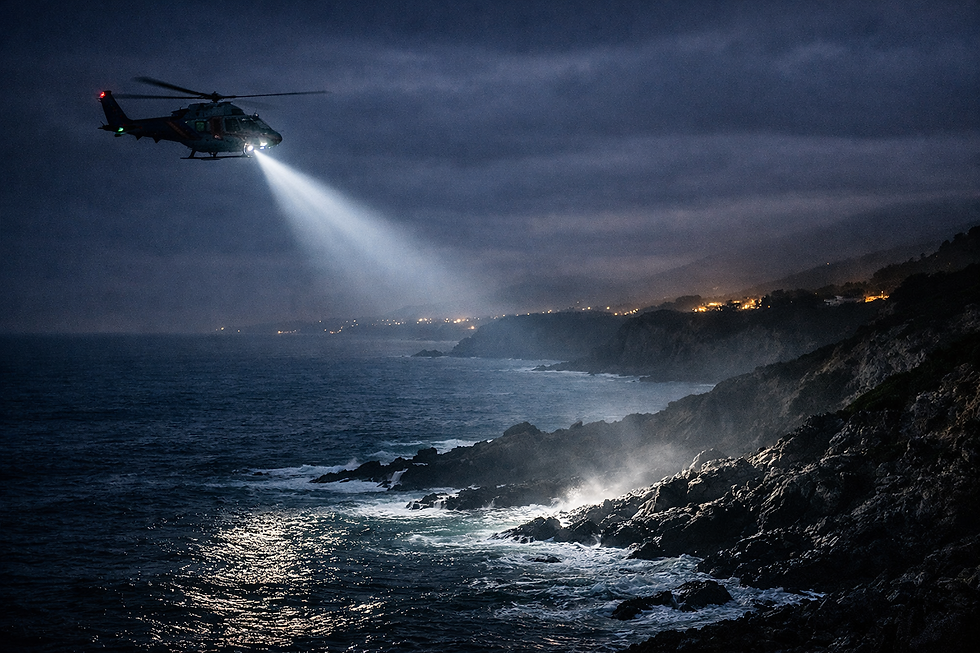
And when you lose your person, that mission doesn’t stop. It just changes targets.
I’d always imagined myself as a free-flying kite—self-sufficient, soaring, entirely independent. But this book politely informed me that my flight path was actually tethered to a safety net I completely took for granted. I thought I was signing up for insight, not a full psychological autopsy.
Why You’re Ready to Fight the Self-Checkout
McDaniel notes that “unmet needs for protection fester like an angry infection.” And grief has a way of turning tiny irritations into five-alarm fires. One blinking red light at the self-checkout and suddenly your pulse is in your throat, your skin is hot, and your body is convinced you’re being hunted.
It’s not that you’ve suddenly become a feral gremlin with a debit card. It’s that your internal GPS is spinning in a void. The person who used to help regulate your world—your emotional thermostat, your quiet stabilizer—is gone.
Honestly, if the machine sighs at me one more time, I’m biting it.

Your nervous system is scanning for danger in the cereal aisle because the one who used to co-regulate your biology is no longer there.
“Grief isn’t personality. It’s biology.”
That’s Mother Hunger in real time: the body searching for the safety it once knew.
The Illusion of the Autonomous Powerhouse
For nearly thirty-two years, I prided myself on being the “independent one.” I viewed my hyper-independence as a badge of honor, but McDaniel’s research pulled back the curtain: often, what we call autonomy is actually a high-functioning survival strategy—the child of unmet needs.
In truth, my independence was just a luxury Greg provided.
I thought I was a free-flying kite, dancing on my own currents. I was wrong. I was a kite in a steady wind, held by a hand I never bothered to look back at.
The string was invisible until it wasn’t.

When Greg died, it felt like the string snapped mid-flight.
One second I was soaring; the next I was tumbling, end over end, toward a field I didn’t recognize.
And while Greg wasn’t a natural nurturer, this book finally helped me translate his unique love language. He carried his own version of mother hunger, shaped by a childhood where love didn’t take the form of affection or praise. His emotional language was practical: he didn’t offer a hug; he checked the wiper fluid and the tire pressure.
But in his dialect, a tire-pressure check was basically a Shakespearean sonnet.
I truly believe the reason Greg chose me, and I chose him, was that we subconsciously knew we each needed what the other lacked. He sought me out because I was affectionate and praised him; I sought him out because he was steady, loyal, and the exact kind of balance I needed.
We were two people with mother hunger, building a life together—each offering safety in the ways they knew how, and filling in the empty spaces for each other.
Reading this book has helped me understand Greg in ways I never fully could when he was alive. His mother hunger ran deeper than mine—shaped by a childhood in which his mother’s love didn’t take the form of affection, praise, or nurturance. I wish I had known then what I know now. I wish I had better understood the biology beneath his practicality, his way of loving through tire pressure, steady presence, and showing up. This book didn’t just explain me—it translated him.
If any of this stirs something in you, I can’t recommend Mother Hunger (revised edition) enough. It put language to things I’ve carried my whole life, and it helped me understand Greg with a tenderness I wish I’d had sooner.
The Universe’s “Low Fluid” Warning
Greg’s practical, tire-pressure version of safety was something I completely took for granted—until I was forced to navigate the mechanical world without it. After he passed, I bought a new car because my 10-year-old Tahoe with 200,000+ miles had earned its retirement. I thought a fresh start meant fewer problems. Instead, this car is obsessed with its windshield wiper fluid. Every three weeks, the dashboard lights up like it’s announcing a national emergency.
It pisses me off because that simple task was Greg’s department.
And honestly, at this point I’d like to file a formal complaint with the universe about why neon green has become the theme color of my life this year. First I turned the pool into a radioactive swamp, and now every car fluid I touch looks like it escaped from a toxic waste facility. Apparently grief comes with a complimentary slime palette.
So of course, a few weeks ago, came my now‑infamous Turkey Baster Incident—because widowhood apparently includes surprise practical exams. I accidentally poured wiper fluid into the coolant reservoir, which is how I ended up in the garage staring into the engine like it was a medical drama and I was the underqualified intern.
Avery came flying out of the house with a turkey baster like she was responding to a Code Blue, and I was on the phone with a friend begging them to come make sure I didn’t permanently ruin the car. It was a full‑scale, multi‑generational crisis response team—all because I tried to do one simple adult task unsupervised.
Coolant has a smell you don’t forget—sharp, chemical, almost sweet in a way that makes you suspicious. And there I was with my adult child, elbow‑deep in the guts of the car, muttering to myself like a woman who has officially run out of adult supervision.
Some women have signature cocktails. I have signature automotive mistakes.

And the hardest part? There was no Greg standing beside me—no amused head shake, no exasperated sigh, no “What did you do now?” grin. Just me, Avery with the turkey baster, two friends on the way, and the quiet space where his presence used to be.
Now, every sensor light feels like the universe whispering,
“Hey… your anchor is missing.”
Mother hunger again: the body noticing every place where nurturance once lived.
Parenting Through the Tag-Team Void
I’ve been feeling that missing anchor acutely. My 20-year-old daughter, Avery, had all four wisdom teeth removed recently. Major surgery. Major swelling. Major pain. She looked tiny again to me—pale, swollen, her voice cotton-thick, like grief had pressed rewind on her adulthood.
In the old life, Greg and I would have tag-teamed the recovery—one of us handling logistics while the other handled comfort. We were a quiet machine, passing the baton without speaking.
Instead, I had to be at my desk the very next morning after her surgery because my PTO leave evaporated months ago when I took time off after Greg passed. My leave balance is basically a desert. The guilt sat in my chest like a cinder block. The house felt too quiet when I left—like it was holding its breath with me.
She’s finally feeling like herself again (thank goodness), but that week was a harsh reminder of how much the absence of a support system changes everything.
Avery holds me to a higher standard than anyone else—not out of judgment, but because she’s always been the one who sees straight through me. She’s the child who reads the room before she enters it, who adjusts herself to keep the peace, who learned early how to track the emotional weather of the adults around her.
She’s twenty now, but she still reaches for me in ways that remind me that mothering doesn’t end just because they grow up.
Her hunger isn’t loud; it’s precise.
She wants reassurance, grounding, a place to land. And I feel the weight of that—the responsibility of being the one steady thing in a world that has rearranged itself around her loss.

Mother Hunger was originally written through a mother–daughter lens, but the revised edition expands its focus. It dives into how these deep biological patterns echo across genders and generations, making it clear that men carry this hunger too.
Reading it opened my eyes to my own mother’s story. It helped me understand her with a whole new level of grace, because she never received that essential nurturance from her own mother. I knew my grandmother well and observed that emotional distance firsthand, but seeing it through the lens of biology made me realize it wasn't a choice—it was an inherited deficit.
Wyatt was my first homecoming—the one who made me a mother before I even understood what that meant. If Avery holds me to a higher standard, Wyatt is the one I probably over‑nurtured into sainthood. He soaked up every ounce of softness I had to give, and somehow grew into a man who now pours that same steadiness into his own little ones.
And I can feel how much he misses having his dad here—misses that strong male voice to turn to, the one who would’ve known exactly what to say, exactly how to guide him.
He carries that absence quietly, but I see it.
He is proof that attachment isn’t a theory—it’s a lineage. A quiet inheritance of warmth passed hand to hand, nervous system to nervous system.

Their safety map has been rearranged. Even though they’re grown, they’ve reverted to needing Mom for so many things. And I’m standing here wondering when the “retirement” part of parenting actually kicks in. Not really though. I love being needed by them. Because mother hunger doesn’t disappear with age—it just changes shape. But understanding their hunger helps me be a better anchor—even on the days when I feel like I’m failing at it.
Maybe that’s the biology of being held—the ache we carry, the steadiness we relearn, and the way we keep returning to one another until safety feels like home again.
Finding Home Again
Whether you were fused at the hip with your partner or convinced you were a free-flying kite, losing your person quite literally knocks the wind from your sails. The body doesn’t care how competent you are. It only knows the one who helped you soar and steadied the string is gone.
So the anger, the overwhelm, the exhaustion—none of it is character. It’s biology. It’s your ancient circuitry trying to find home again, stumbling through the dark with outstretched hands, searching for the familiar warmth of a touch that isn’t there.
McDaniel describes that lifelong ache—the sorrow for what wasn’t and will never be—and I feel that truth in my bones. That hidden wound we think we should have outgrown by now, but still carry like a shadow.
Mother hunger is the compass.
Grief is the terrain.
And rebuilding is the slow,
sacred work of learning
to walk without the hand
that once steadied you.
We need to be kinder to ourselves as we rebuild.

A Note from Jen...
If you’re somewhere in the thick of this—navigating your own grief while trying to be the steady ground for the people you love—I hope this piece reminds you that nothing about your exhaustion or overwhelm is a moral failure. It’s biology. It’s longing. It’s your nervous system trying to find its bearings in a world that suddenly has fewer hands to hold it.
Parenting doesn't end when they grow up, and holding space for adult children as they navigate their own rearranged safety maps is beautiful, heavy, sacred work. If you've found yourself feeling like you're failing at being their anchor, or wondering how to carry their hunger alongside your own, please give yourself some grace. You are not broken. You are rebuilding. And rebuilding a legacy of warmth takes time.
You’re doing better than you think. Truly.
If this stirred something in you, feel free to share it—your voice might be the exact lifeline someone else needs today.
Journal Prompts
Silent Supports — What were the quiet, tire-pressure ways your partner supported you that you’re noticing now?
Angry Infection — When you feel that “angry infection” of grief, where is your search-and-rescue mission trying to land?
Biology vs. Blame — How does it change things to view your family’s chaos as a biological crisis instead of a personality flaw?
Further Reading
Mother Hunger (Revised Edition)—Kelly McDaniel. A newly expanded look at how the loss of maternal nurturance, protection, and guidance shapes our sense of worth and connection. This edition includes three new chapters—Men and Mother Hunger, First‑Born Daughters, and Parenting with Mother Hunger—widening the lens to show how these patterns echo across genders and generations. Warm, validating, and deeply hopeful.
The Body Keeps the Score—Bessel van der Kolk. A foundational exploration of how trauma lives in the body and how healing requires more than logic— it requires connection, safety, and attunement.
What Happened to You?—Bruce Perry & Oprah Winfrey. A compassionate conversation about how early experiences shape our nervous systems, our relationships, and our capacity to feel safe in the world.


This one lands perfectly. Hole in One! It's BIOLOGY... thank the good Lord above; it's biology. That fact actually offers quite a bit of relief. Relief is what I've been searching for for the last 75 days.